The Truth About \"Bad Sleep Habits\"
If right now you are reading articles that say if you; contact nap, feed to sleep, rock, pat or anything else that requires you to get your little one to sleep, then I see you.
You are not doing anything wrong or creating bad sleep habits necessarily but rather doing what you need to do to get through right now. Even if that means your little one needs to sleep on you just so they will take their midday nap.
I see how exhausted and overwhelming this season may feel right now. Finding the right information may be difficult or feeling like you are failing because how you get your baby to sleep is classed as creating “bad sleep habits”.
In this article I am not going to tell you that you should change anything or say you are doing it wrong, because I see a parent who is doing what they need to do at this moment in time to get their little one to sleep so that they can have 10 minutes to themselves. It’s not selfish to want some time to breathe and relax.
Instead, I will give you the information to decide what you want to do with the so called “bad habits” and whether you are ready to make a change or happy where you are right now.
What are "Bad Sleep Habits"?
The term “bad sleep habits” is often used to describe things like feeding to sleep, rocking, contact napping, or the need for parental support to settle. However many of these behaviours are completely normal during early infancy and early childhood.
To better understand why, it helps to first understand what sleep associations actually are.
What are Sleep Associations?
Sleep habits are associations that have been formed for a specific reason. However rather than calling them bad sleep habits we call them sleep associations. This is because they are cues that are linked to sleep. Usually when the cue appears we expect sleep to follow hence “sleep association”. A sleep association only becomes a problem when it is no longer working for your family.
For babies these associations are formed through repetition which is how they learn and become associated with sleep.
Both adults and children have sleep associations that help them to fall asleep. Whilst an adult’s routine may seem to have a smaller impact on their sleep than a child’s, it’s not true. An adult’s routine can have the same impact as a child’s sleep routine and can make the difference of falling asleep in 15 minutes or 2 hours.
Some examples of sleep associations for infants and children include;
Rocking
Feeding
A dummy
White noise
Cuddles
Contact Naps
A lullaby
A comforter toy (over 12 months)
How these Sleep Habits Develop
You’ve brought this beautiful new baby into the world, they have no skills or knowledge of anything, they look to you learn about the world and develop new skills. Your baby’s current skills to fall asleep have been developed with the experiences set before them in everyday life.
Let’s say you rock them to sleep. Your baby has come into this world, and you discover rocking really helps them to fall asleep. So, you keep using it at every nap time, bedtime, at night wakes, to calm them. Along the way your baby has learned through repetition to associate rocking with falling asleep and now they cannot fall asleep without it.
Remember your baby doesn’t know any better than being rocked to sleep and expect that is how they will fall asleep every time they need sleep. To learn any skill your baby must practise it over and over again till they get the hang of it.
Why these Habits are Actually Biologically Normal
These so-called bad habits are just normal actions which your baby gets their needs met in early infancy. It’s where your little one learns to regulate their emotions and needs through co-regulations. It’s how they develop an attachment and closeness to you.
Your baby falling asleep on you is normal because the sound of your heartbeat will be calming to them. It’s all they heard for 9 months before coming into this world.
Them falling asleep whilst feeding in your arms. It’s warm, cosy and safe where they feel they can fall asleep without any problems. You are home and their safe place.
Your baby is new to this world; they have no idea how to talk or move independently. They rely solely on you to meet every single one of their needs especially in that first year. You show them how to calm when upset just through having cuddles and breathing.
When Sleep Associations can Become Difficult
There is nothing wrong with your child’s sleep associations unless they are no longer sustainable for you to manage. The only time there is a problem is when it starts to impact you negatively.
Do you struggle with
Hourly wakes?
Exhaustion?
Needing to do extensive settling?
Have no breaks?
Or experience burnout?
You need to think about whether you can manage this sleep association long term.
Ask yourself:
Is it sustainable for me to be waking every hour overnight to resettle my little one while still trying to function the next day?
How is the exhaustion and burnout impacting you physically and mentally? Does it show up in how you interact with them?
Do you have the support network to be managing this sleep association?
If the answer is no that is completely ok. It just means this sleep association no longer serves you how it once did and isn’t sustainable any longer.
When do these Habits Need to Change?
There is no specific time, generally speaking, for when these habits need to change. It is all based on your specific family and situation to whether you need to make a change.
The decision to change the habit must be one you are:
Ready and committed to putting in the effort and time required
It’s a choice and not from pressure from those around you
It’s the right time for your family
Signs you May be Ready for a Change
Are you thinking how can I know whether I’m ready for a change?
Think about the following and if any of them you feel that’s me, then maybe that’s your answer to it’s time for a change.
Regular or constant exhaustion
Easily frustrated
Frequent night wakes
It weighs on your mental load
You want more balance and predictability for your days and nights
In my experience parents who come to us when they are ready to make a change and are committed to implementing the changes have the best results. Over a parent who is not ready to make changes but feels the pressure to change their little ones sleep to make someone else’s life easier.
Gentle ways to Support Sleep without Pressure
If you are ready to make a change here are some simple tips you can use an implement today.
Bedtime Routine Tips
If you don’t already you want to have a strong bedtime routine that is clear, consistent and predictable. Ensuring that you repeat the same routine the same way each night.
If you’re unsure where to begin, you can read our blog on creating a calm bedtime routine for gentle and practical ways to support your little one’s sleep.
My 4 top tips:
Bath Time – helps calm and regulate the body for bed
Dim lights – keeping everything low and calm leading up to bed
1 repeatable activity – reading the same book or singing the same song each night (helps to create a sleep cue in itself).
If over 12 months introducing a comfort toy for sleep time only (ensure there are no hazardous or loose bits it the toy).
In general having a predicable routine all round helps your little one to know what to expect in there day.
Overtiredness Tips
Another factor that can make sleep associations feel more difficult is overtiredness. If your little one is stuck in an overtired loop they aren’t going to be getting much quality sleep at night. Instead, you’ll find they’ll likely wake up more frequently instead of sleeping better.
To help support overtired bubs:
Aim to get the recommended amount of day sleep for your little one age
Do top up naps (contact cat nap) if they don’t take a full nap
Ensure they are getting enough physical exercise for their age and development
If your little one is eating solids, ensuring they are having a balanced diet with nutrients such as iron and zinc may also help support overall wellbeing and sleep.
Pay attention to their sleepy cues and catch them early, it’s better to do a slightly longer wind down and settling than trying to settle an overtired baby.
Practise One Sleep Change at a Time
If you decide you want your little one to nap in their cot and not on you, try one nap a day in the cot to begin with. It’s a big change and adjustment for them. It’s completely normal if they need time, reassurance and support while adjusting to something new. You do not need to leave them alone at any point giving them cot side support and reassurance as they adjust is completely normal and encouraged.
Once they get used to the cot and can manage going down for 1 nap, try adding the next. Take it one step at a time. We are looking for consistency over perfection, because you will find over time they will link the cot to sleep therefore creating a new sleep association.
Final Thoughts
Sleep does not need to change overnight. Often small, gentle adjustments over time can make a big difference without removing the comfort and connection your child relies on.
Be proud of how far you’ve come. Your little one is lucky to have you as their parent and I can imagine you are doing the best you possibly can.
Remember your baby is still learning just like you are and you are doing your amazing job at teaching them new things every day.
If your current sleep situation no longer feels sustainable, Little Owls Sleep Specialist offers gentle and holistic sleep support tailored to your family. You can explore our sleep support services here.
Frequently Asked Questions
As they get older and develop teeth this can become less favourable when it comes to oral hygiene. However, as a young infant it is not a negative association or a problem until it is no longer sustainable for you to maintain.
No, they are completely normal during young infancy. As they get older we‘d recommend trying to get them to take longer naps to consolidate their sleep in the cot
No, it mimics the motions of being carried by the mother in the womb helping them to fall asleep. The motion of rocking helps your baby calm their nervous system, encourages emotional bonding and is natural.
Rocking your baby to sleep only becomes a problem when the sleep association of rocking to sleep is no longer sustainable for you to manage long term. Such as requiring long periods of time where you little one needs to be rocked to sleep leading to fragmented sleep for you and bub.
Ensure that you are not leaving your baby alone and unsupervised in inclined furniture or items like bounces, swings or baby rockers, due to the suffocation risk they pose. It is safest to transfer them into their cot.
Your baby is capable of learning to self-settle from 4 months old. We’d recommend somewhere between 4 – 6 months teaching your little one to self-settle, should that suit your family.
Yes, sleep associations can be changed gently. Rather than abruptly cutting an old habit, gradual methods help focus on phasing out specific habit with a new association to reach parents sleep goals.
I help clients change sleep associations at a pace that suits them and works towards their sleep goals. You can explore our sleep services here.
Some children naturally outgrow certain sleep associations over time, while others continue to rely on them well into toddlerhood and beyond. This often depends on the type of association, temperament, development and level of parental support involved.
This has been suggested by a 2018 study which found 57% of babies between 6 to 12 months old did not sleep more than 6 hours consecutively overnight. However, it did suggest that sleeping through the night was linked to lower breastfeeding rates suggesting that the level of parental involvement can impact whether a baby sleeps through the night.
In short yes sleep association and crutches are the same thing technically. However, a sleep association is generally seen where the child can fall asleep independently without help from a parent. Whereas a sleep crutch is associated with needing parental assistance to fall asleep and dependant on a person rather than an environment or step in a routine.

Hi, I'm Genna!
I'm a certified pediatric sleep consultant and night nanny dedicated to helping newborns to 4-year-olds sleep peacefully, through personalized guidance and support.


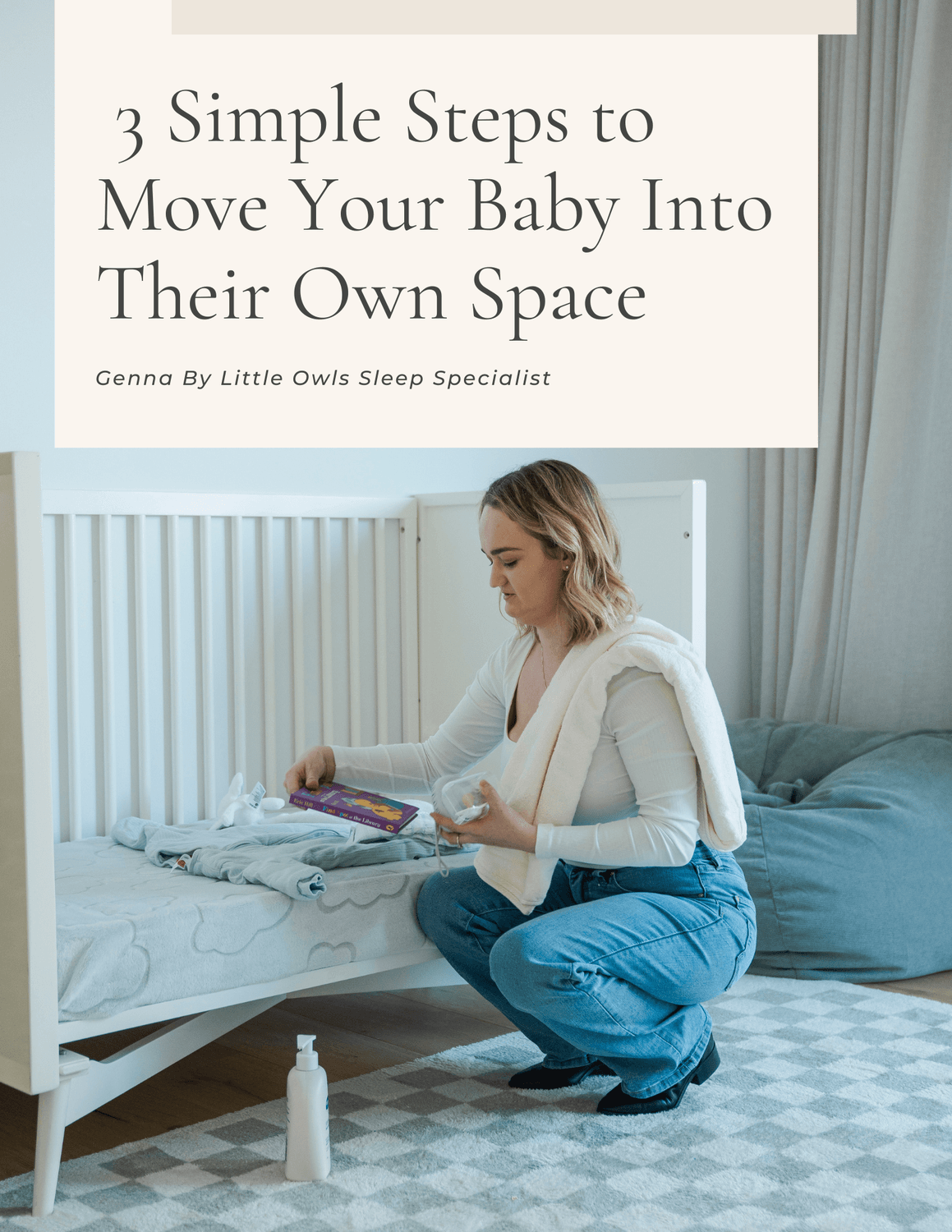
Download my 3-page
3 Simple Steps Move your Baby into Their Own Space!
Free Stuff
Perth, Western Australia

©Little Owls Sleep Specialist 2026. All rights reserved. | Privacy Policy | Terms and Conditions | Template by sleepconsultantdesign.com