
Why Won't My Baby Sleep Unless Held?
Are you currently feeling the toll of not being able to put your baby down to sleep without them waking up? Have you read articles saying it’s just a phase or wait it out? I see you.
You haven’t done anything ‘wrong’ to make your baby only sleep unless you hold them. You simply have done what you needed to so that you could manage and get by. However, now you are finding holding your little one to sleep just doesn’t work for you any longer and that’s ok.
You’re among many exhausted and sleep deprived parents who find themselves pacing the house at night in the desperate hope their little one will transfer to the cot without waking.
It can feel overwhelming, exhausting and like it's never going to end, especially when you are running on so very little sleep yourself. The good news is that it’s incredibly common especially in the newborn and infant stages, and there are gentle ways to support more restful sleep over time.
In the following article we’ll walk you through all you need to know about contact sleep, including what it is, why you can’t put them down, when it starts to feel unsustainable and the small changes you can make to help your little one sleep in their cot (when you feel like it’s right).
What is contact sleep?
Right now, you may be feeling like your baby will only sleep in your arms and wakes the second you try to put them down in their cot. You may feel stuck holding your baby for naps, bedtime, or throughout the night just to keep them asleep.
During the newborn stage and early infancy, it is incredibly normal for babies to fall asleep on their parents and seek that closeness.
After all, your baby has spent the last 9 months growing safely inside you and is now adjusting to a world that feels completely different from what they have known. Your arms, warmth, movement, smell, and heartbeat all help your baby feel safe, calm and regulated.
This is known as co – regulation, where your baby relies on your presence to help regulate their emotions and nervous system.
Do you regularly find your little one falling asleep:
On your chest,
In your arms,
Over your shoulder,
Whilst feeding,
In the baby carrier
Or while being rocked, patted or walked around?
This is commonly referred to as contact sleep or contact napping, where a baby sleeps while physically close or connected with their caregiver.
It is especially common from birth to 4 months of age. For many babies, contact sleep naturally begins to reduce between 4 to 6 months as their sleep patterns, development, and ability to settle gradually mature.
Why your baby may wake when put down
Think about this for a moment.
How would you feel if you fell asleep warm and comfortable in your bed, snuggled under the blankets and pillows, only to suddenly wake up on the cold kitchen floor?
You would likely wake up instantly feeling confused, unsettled, uncomfortable, and wanting to return straight back to the safety and comfort of your bed.
For babies, being transferred from their parent’s arms into a cot can feel very similar.
One moment they are asleep in your warm, cosy arms, listening to your heartbeat feeling your movement and closeness. The next. they are placed onto a still, cool mattress where everything suddenly feels different
Instead of smoothly drifting between sleep cycles, they stir, wake, cry or call out for support because the environment they fell asleep in has changed.
Your baby quickly learns that when they call out, you respond. Your presence helps them feel safe, calm, and regulated again.
Your baby is not trying to make sleep difficult or create "bad habits". They are relying on you to help regulate their emotions and nervous system because unlike adults, they are not yet developmentally capable of fully doing this on their own.
When your baby cries after being put back down, they may be communicating:
"I need help feeling safe enough to fall back asleep."
During the first 12 months of life babies are adjusting to so many new experiences outside of the womb. They are learning attachment, trust, and who their safe people are, the people who respond when they need comfort, connection and support.
This is why contact sleep, cuddles, and needing support to resettle can be incredible normal during infancy.
Are you creating bad sleep habits by holding your baby?
You may be feeling like you are "creating bad habits" but you are actually doing is responding to your baby in a completely normal and developmentally appropriate way.
Your baby is seeking regulation, not trying to manipulate you.
It is completely normal for babies to:
Need contact naps
Require extra support to fall asleep
Wake frequently overnight
Struggle with cot transfer
Have inconsistent sleep
Your baby is not born with the ability to settle, or resettle independently. These are skills that develop over time through growth, maturity, repetition, and gentle support from their caregivers.
Right now, your baby is simply doing what they know works for them.
There is no need to change anything unless it is no longer sustainable for you or your family, or it has become something you feel ready to gently work on.
When it starts feeling unsustainable
There may come a point where things start to feel too hard, too tiring, or no longer manageable for you or your family. This can look different for everyone, it might be exhaustion from contact naps, difficulty having anyone else settle your baby, or simply feeling like the current way of doing things no longer fits your day to day life.
If this is how you are feeling, it may be a sign that it is time to gently explore change.
Change does not need to be all at once. In fact, for most babies and families, it works best in small, gradual steps or simple adjustments over time.
If you are finding it difficult, or there are other practical reasons you need your baby to sleep more independently, such as having another caregiver settle them or needing more flexibility in your day, it is absolutely okay to start shifting things.
This does not mean you are doing anything wrong. It simply means your current approach may no longer be the most sustainable fit for your family right now.
You are also not locked into one way of doing things. Babies are incredibly adaptable, and with gentle consistent changes, sleep patterns can evolve over time.
If you do decide to make changes, the key is consistency and confidence, knowing you are making choices that support your family in this season, not the one you were in a few months ago.
How to help your baby sleep in their cot
If you are ready to make changes, here is a simple step by step guide to get you started. Remember small adjustments can gently support your baby's sleep over time.
Step One: Create a Simple Wind Down Routine
Start with a consistent wind down routine before sleep. This might include dimming the lights, reducing stimulation and noise, and repeating a calming activity such as a lullaby or cuddle,
Repetition helps your baby begin to recognise sleep cues and develop sleep associations.
You can read more on creating a bedtime routine on our post
Step Two: Introduce One Cot Nap a Day
If your baby is not yet napping in their cot, start with just one nap per day in their sleep space.
This allows them to gradually adjust while still receiving the comfort and support they need. You can remain responsive and hands on as they learn to settle in their own sleep space.
Step three: Review their sleep environment
Take a moment to consider your baby’s sleep space:
Is the room dark enough or is there light that may be distracting?
Would white noise be help mask background sounds and create consistency?
Is baby appropriately dressed for the room temperature, not too hot, not too cold?
Does the space feel calm, safe and simple, without any unnecessary stimulation or hazards?
Change takes time, Be gentle with yourself and your baby as they learn and adjust.
Final Thoughts
Everything you are feeling and experiencing right now is completely valid and normal. While this stage is incredibly common, it doesn't mean it has to stay the same forever if it no longer feels supportive for you and your family.
If things are starting to feel unsustainable long term, you are allowed to make conscious changes that better support your family moving forward.
Your baby is currently doing what they know how to do. Using you to regulate and meet their needs. They are not manipulating you or trying to make sleep harder. They simply don’t yet have the ability to do things differently until they are gently guided and learn new skills over time.
It is absolutely okay to make changes when you are ready. There is no rush, and there is no single “right time”. The right time will look differently for every family, and what matters most is what feels right and sustainable for you.
If you get stuck, overwhelmed, or unsure where to start, support is available. You don’t need to navigate this alone. We are here to help guide you and your family through it when you’re ready.
Frequently Asked Questions
Yes, especially in the newborn stage and early infancy. Many babies feel safest in close contact and rely on their caregiver for regulation and comfort while they sleep.
For most babies, yes. As their nervous system matures and their sleep cycles develop, they gradually become more able to sleep independently. The timing looks different for every child.
No. in the early months, your baby is not forming “bad habits”, they are responding to their natural need for safety, closeness, and regulation. Sleep skills develop over time with maturity and gentle sleep support.
Often this happens because your baby falls asleep in one environment (your arms) and wakes in another (the cot). This change can feel unfamiliar and cause them to seek the same conditions they fell asleep in.
Contact sleep can be safe when done in a safe, awake, and supervised environment. It is important to always follow safe sleep guidelines when holding or feeding your baby to sleep.
Only when it feels right for you. If contact sleep is no longer sustainable, or you need more flexibility, gentle changes can be introduced gradually when you feel ready.
What can I do to help my baby sleep in the cot?
Small, consistent steps can help, such as a calming wind down routine, a supportive sleep environment, and gradually introducing cot naps when appropriate.
If sleep has started feeling overwhelming for your family, gentle support is available.
At Little Owls Sleep Specialist, we support families with responsive, holistic sleep guidance tailored to your child and parenting style
You don't have to navigate it alone.

Hi, I'm Genna!
I'm a certified pediatric sleep consultant and night nanny dedicated to helping newborns to 4-year-olds sleep peacefully, through personalized guidance and support.


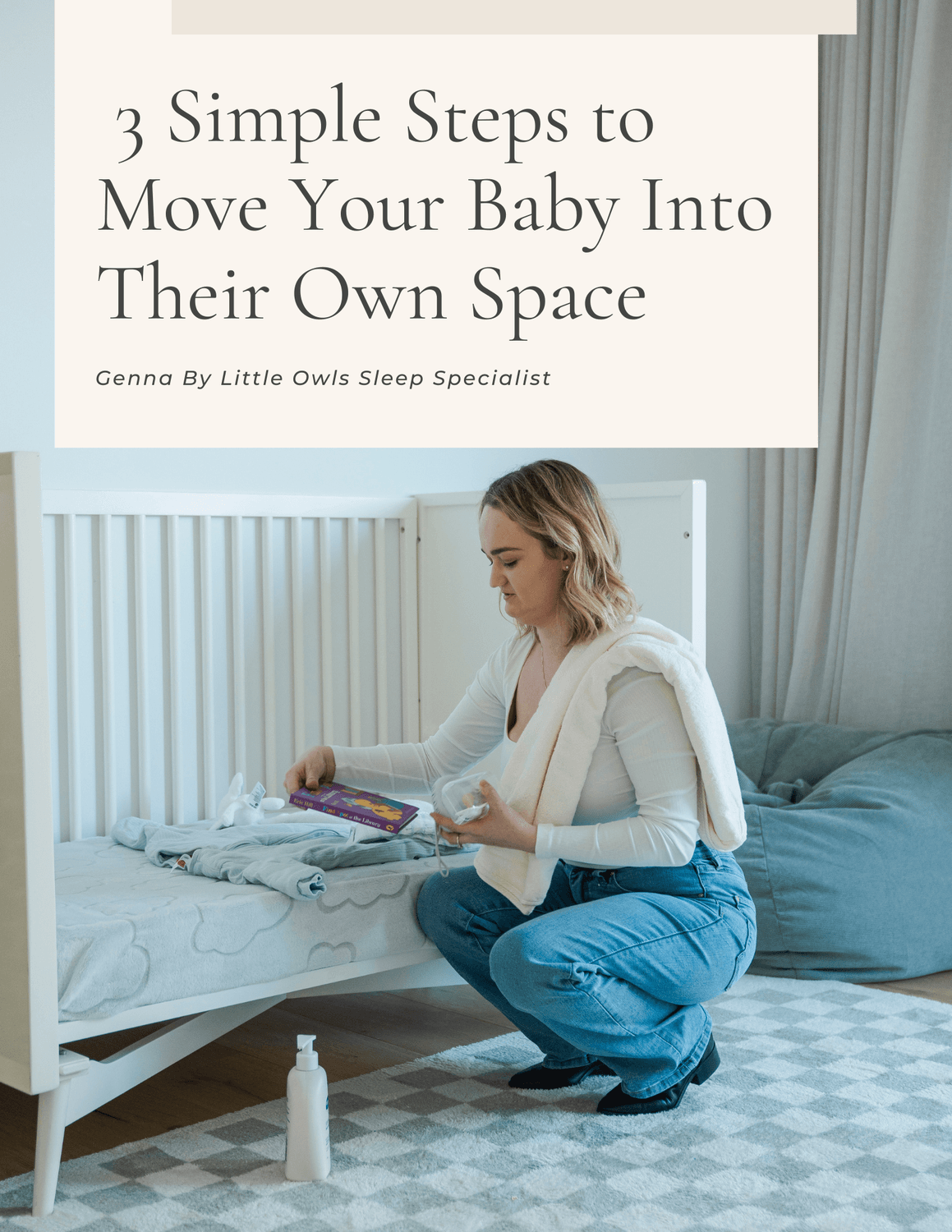
Download my 3-page
3 Simple Steps Move your Baby into Their Own Space!
Free Stuff
Perth, Western Australia

©Little Owls Sleep Specialist 2026. All rights reserved. | Privacy Policy | Terms and Conditions | Template by sleepconsultantdesign.com